
From Data to Decisions
A redesign of a supply chain analytics platform to move from passive dashboards to decision-driven experiences.

Before
KB initially functioned as pre-filtered reports and dashboards.
Landing page showed ingestion status instead of insights.
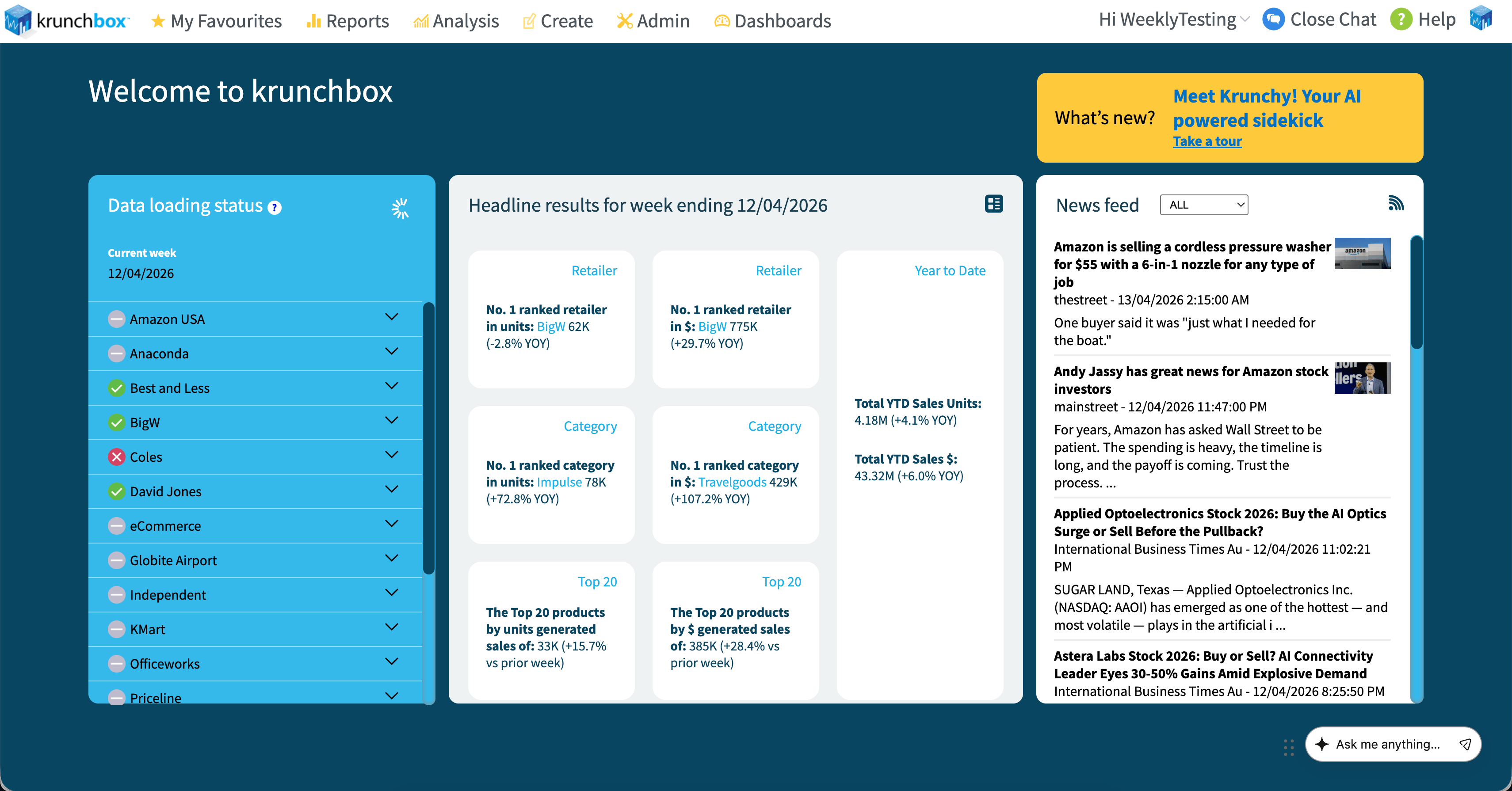
Users came for insights — but had to decode data instead
Too many filters before seeing anything useful
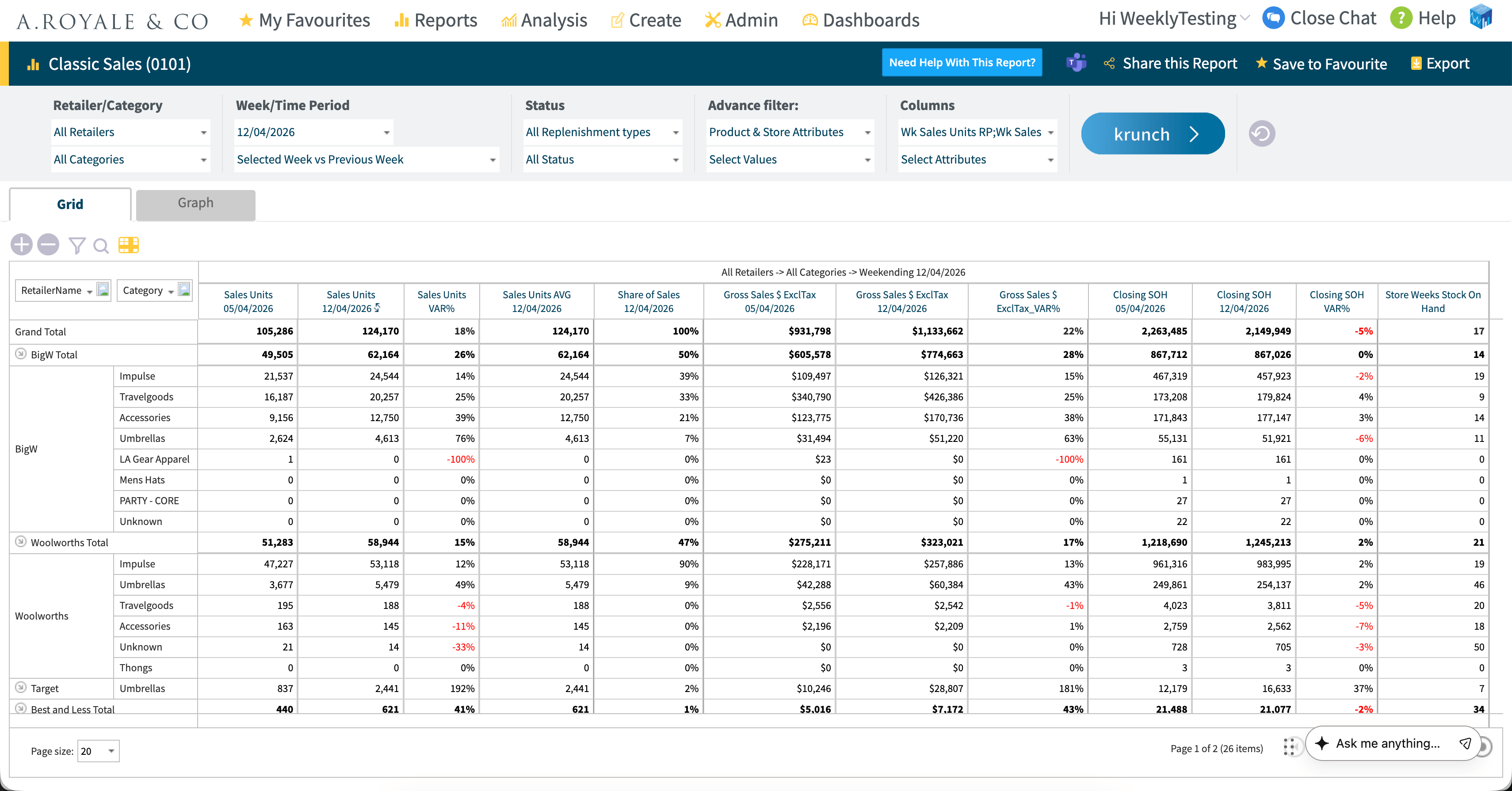

Shift
Old experience → New experience
Data display → Decision guidance
User interpretation → Guided insights
Passive dashboards → Actionable workflows
After
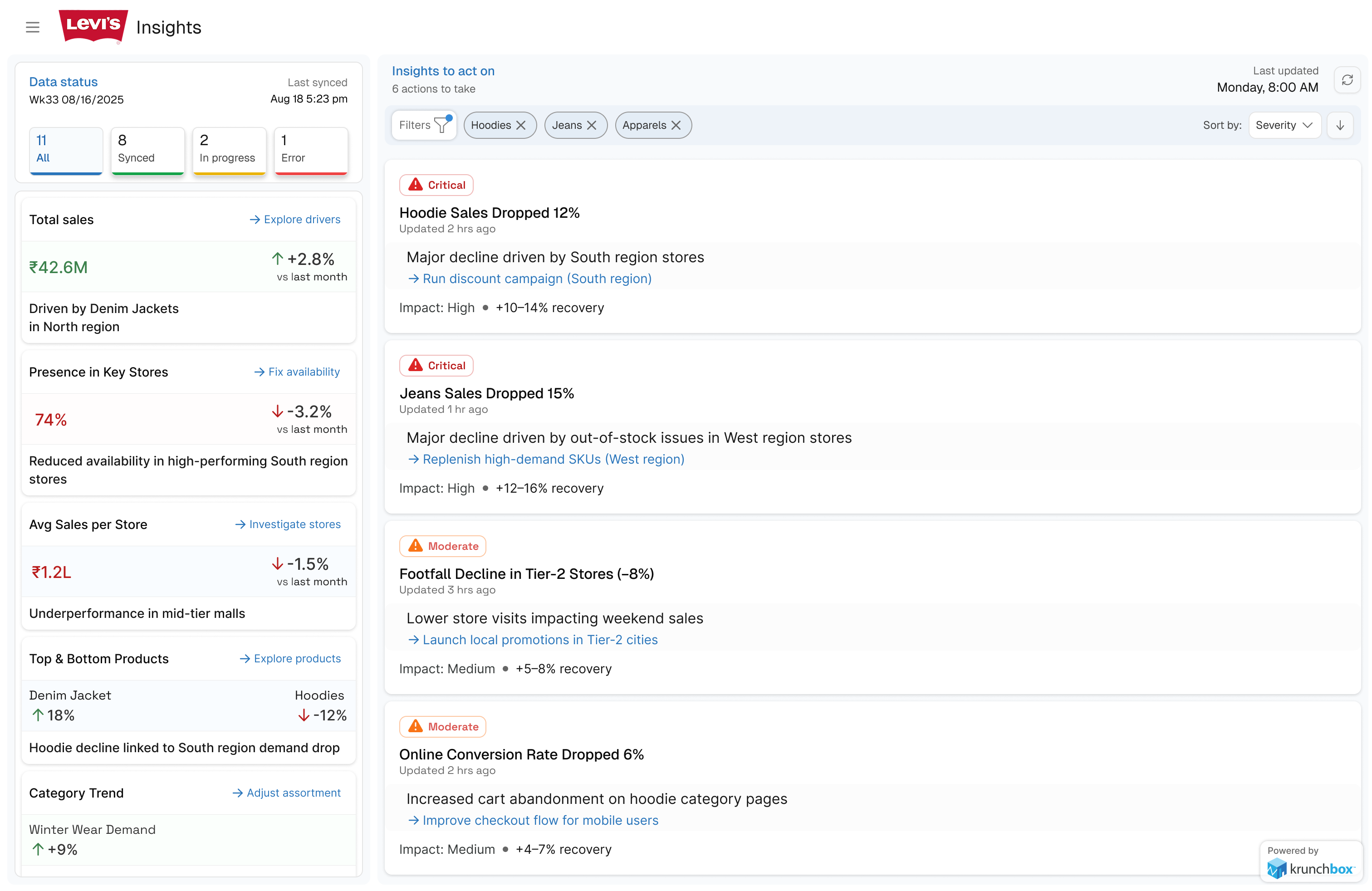
Users land directly on what needs attention
Insights are prioritized and paired with clear next actions
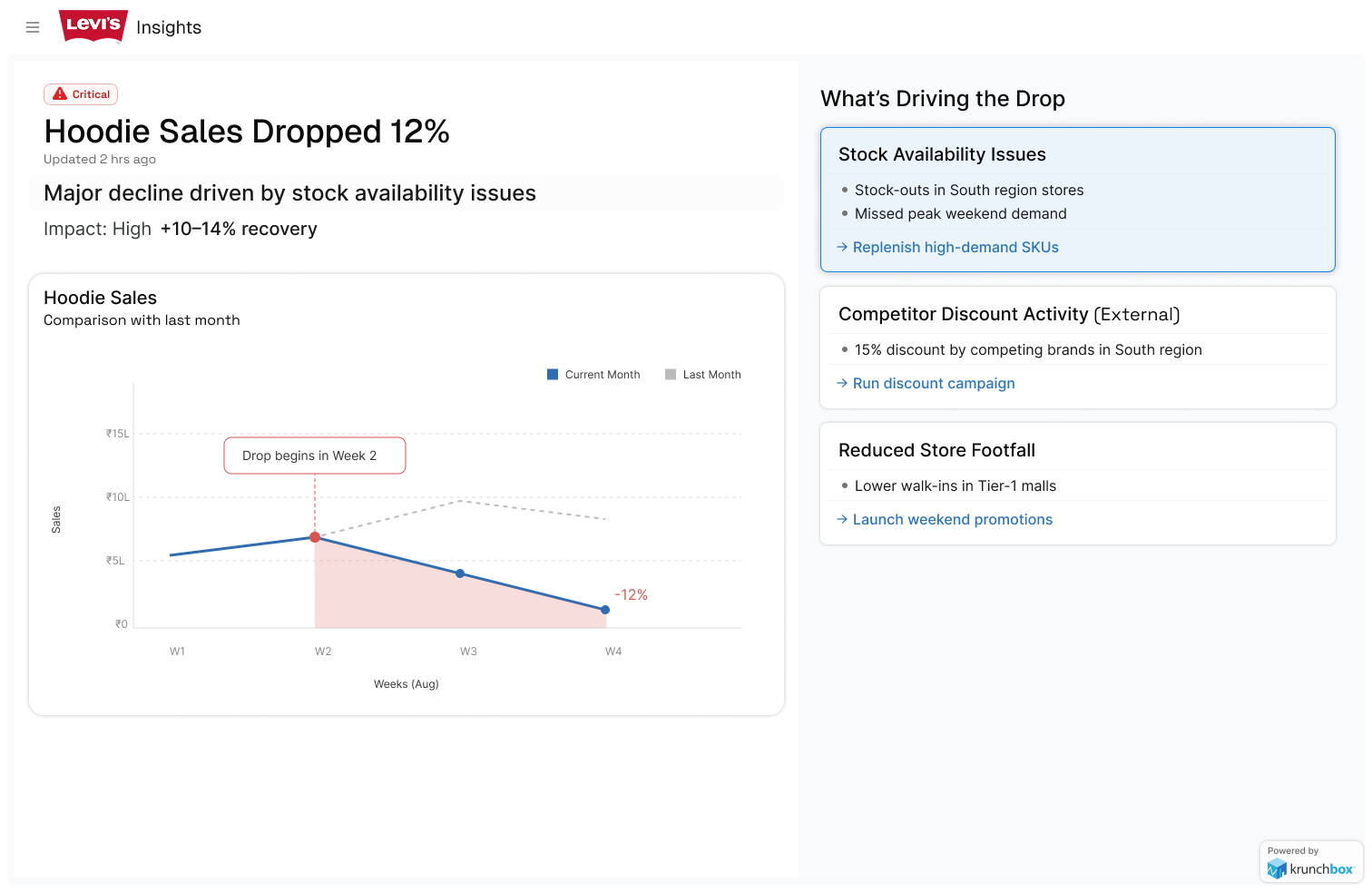
Every insight is explained, not just shown
Drivers, context, and actions guide the next decision
Then vs now
Experience how the product evolved
From interpreting data to being guided toward decisions.
See how the system surfaces data but fails to guide decisions

See how insights, context, and actions come together to guide decisions


From Data to Decisions
A redesign of a supply chain analytics platform to move from passive dashboards to
decision-driven experiences.
Before
KB initially functioned as pre-filtered reports and dashboards.
Landing page showed ingestion status instead of insights.
Users came for insights — but had to decode data instead
Too many filters before seeing anything useful
Shift
Old experience → New experience
Data display → Decision guidance
User interpretation → Guided insights
Passive dashboards → Actionable workflows
After
Users land directly on what needs attention
Insights are prioritized and paired with clear next actions
Every insight is explained, not just shown
Drivers, context, and actions guide the next decision
Then vs now
Experience how the product evolved
From interpreting data to being guided toward decisions.
See how the system surfaces data but fails to guide decisions

now

Explore the redesigned experience

See how insights, context, and actions come together to guide decisions

From Data to Decisions
A redesign of a supply chain analytics platform to move
from passive dashboards to decision-driven experiences.
Before
KB initially functioned as pre-filtered reports and dashboards.
Landing page showed ingestion status instead of insights.
Users came for insights — but had to decode data instead
Too many filters before seeing anything useful
Shift
Old experience → New experience
Data display → Decision guidance
User interpretation → Guided insights
Passive dashboards → Actionable workflows
After
Users land directly on what needs attention
Insights are prioritized and paired with clear next actions
Every insight is explained, not just shown
Drivers, context, and actions guide the next decision
Then vs now
Experience how the product evolved
From interpreting data to being guided toward decisions.
See how the system surfaces data but fails to guide decisions
See how insights, context, and actions come together to guide decisions